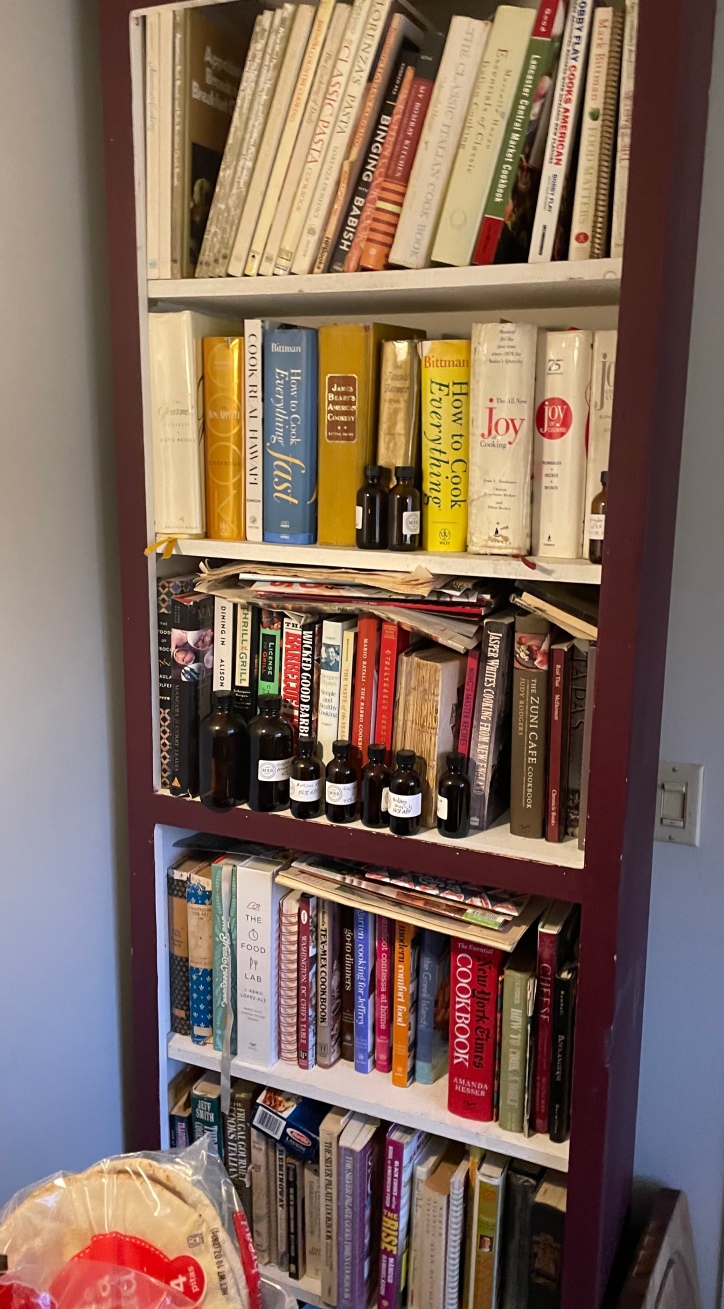
In my recent post about my cooking blog I boasted that I have over 100 cookbooks. It’s true. One of my friends asked which ones are my favorites? A good question! But, a hard question, because I have so many favorites.
But here goes! I decided to break my answer out in categories, so let me begin with general all-purpose cookbooks. My very first cookbook, a wedding present, was Fannie Farmer’s Boston Cooking School Cookbook. At the time I was teaching myself to cook, and I worked my way through it, adding more dishes to my repertoire: sauerbraten, shish kabob, and a variety of soups, chowders, and stews.
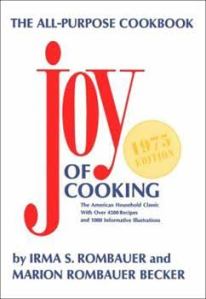 Then came Joy of Cooking, a present from my future wife in 1975. This iconic book was the most comprehensive cookbook there was, where you could find a recipe for most anything. I later got an updated edition in 1997, which is my favorite version. The most recent edition isn’t nearly as good. Joy was my go-to for many years, and I still turn to it often..
Then came Julia Child’s The Way to Cook in 1993. This is another very good cookbook, not as comprehensive as Joy, but with many really helpful recipes, with good photos. Julia will walk you through the Holiday standing rib roast with ease. Her scalloped potatoes are epic!
In a similar vein came Mark Bittman’s The Way to Cook Everything in 2008, a masterful cookbook with a non-fussy approach that I like. I gave this to my daughter when she got married. I also like his The Way to Cook Everything Fast.
I enjoy reading cookbooks that tell stories about the food, and no one is better at it than the incomparable James Beard. I just love his American Cookery. I rarely use a recipe from it anymore, but I love to read it. It’s a veritable history of American cooking.
I have two New York Times Cookbooks by Craig Claiborne, another good storyteller. The Essential New York Times Cookbook by Amanda Hesser is lots of fun, as it looks back on hundreds of recipes published over the decades in the New York Times.
The two Silver Palette cookbooks (1982 and 1985) by Julee Rosso and Sheila Lukens seemed exotic at the time, and still are full of great recipes. Their Chicken Marbella is a great company dish.
I subscribed to Bon Apetit for many years, and their namesake cookbook has many good recipes, as does their counterpart The Gourmet Cookbook by Ruth Reichl. Ironically, Reichl was on a book tour promoting the book when Conde Nast announced they would stop publishing the magazine, a great loss.
I love Ina Garten’s (“The Barefoot Contessa”) cookbooks and have a bunch of them. Her recipes are mostly non-fussy everyday ones. Her seared salmon in a cast-iron skillet is perfect every time.
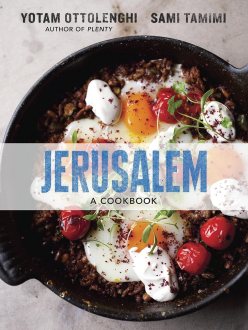 A cookbook I really love is The Jerusalem Cookbook by Yotam Ottolenghi and Sami Tamimi from 2013. This is a beautiful cookbook, with an inspiring backstory. The authors were chefs in London when they discovered they had both grown up in Jerusalem, but on different sides of that divided city. Their food is fabulous! Their roasted chicken with clementines and arak is a revelation.
Finally, in the general category, there is The Food Labby J. Kenji Lopez-Alt. For those who believe cooking is more science than art this is you book. Lopez-Alt, who has a degree from MIT, geeks out on the best way to cook everything. My kitchen is not a test kitchen, but his most definitely is. His pot-roast recipe is worth the price of the book.
For foods from around the world, I cut my teeth on TIME-LIFE Foods of the World, a set of 27 books, edited by Waverly Root. These were beautifully written with gorgeous photos. I still make my paella from the Spanish one.
For French cooking, I have to go with Julia Child’s Mastering the Art of French Cooking in 2 volumes. I inherited these from my aunt and they are early editions from Book-of-the-Month Club. Yes, some of her recipes are complicated and fussy, but the food that emerges is exquisite.
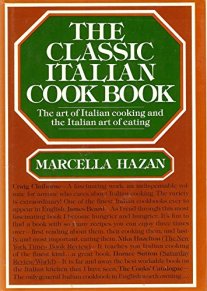 For Italian food, I always turn to Marcella Hazan, especially her first cookbook, The Classic Italian Cookbook. I loved the way she had suggestions that paired dishes to make an Italian meal. She had a second book, and then a third that combined the first two, but omitted the suggestions.
I taught myself how to cook Chinese food from the Joyce Chen Cookbook. When I lived in Boston in the early 1970’s Joyce Chen’s wonderful restaurant in Cambridge was one of the first to branch out beyond American Cantonese cooking to Hunan and Szechuan dishes.
When I moved to Bangor, Maine in 1979, they didn’t have a good Chinese restaurant, so I went to the library and took out her cookbook, then bought my own copy. Chen’s cookbook came out before many Chinese ingredients were available outside Chinatowns, and she made substitutions for the American kitchen. It’s outdated now, but was very useful to me back then.
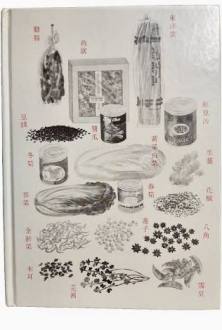 Then in the early 80’s I found a wonderful Chinese cookbook that I still use, The Key to Chinese Cooking by Irene Kuo, published in 1977. Unlike Joyce Chen she didn’t make substitutions; Asian ingredients were by then becoming more available. This is the best cookbook that nobody has ever heard of. Why Kuo isn’t a household name like Julia Child and Marcella Hazan is something of a mystery (for a fascinating story about this mystery go here). She had the same editor that they did, the estimable Judith Jones at Knopf, and the book was popular for a while, but then fell out of print. It has beautiful hand-drawn illustrations, good explanations, and wonderful stories about Chinese food. Her hot and sour soup will make you forget every other version.
For Thai food, I love Nancie McDermott’s Real Thai, which was published in 1992. She spent time in Thailand in the Peace Corps. She breaks Thai cuisine down into its several regions. Her recipes are simple and easy to follow and the food is fantastic. In 1992 you had to make your own Thai curry paste. Now you can buy them in most any grocery store. This is one of my go-to favorites.
For Tex-Mex food, I’ve long relied on Jane Butel’s Tex-Mex Cookbook. It contains easy to follow recipes and delicious outcomes. She was a cooking teacher and it shows in this well-written book.
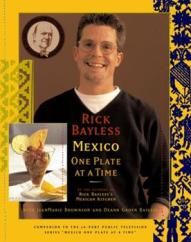 For authentic Mexican, the great Diana Kennedy was the first American to bring real Mexican food to us. She lived for years in remote Mexico, and has several fine books. This is the real deal, but sometimes it has tough to find ingredients and labor-intensive approaches. For a more accessible book, I like Rick Bayless’s Mexico: One Plate at a Time. Each recipe has two versions, the authentic and a modern version.
For grilling and barbecue it is hard to beat Chris Schlesinger and John Willoughby’s The Thrill of the Grill and its two sequels. They make great food, with innovative sides.
For fish and shellfish, there is the magisterial Fish by Mark Bittman from 1999. This is the book that put him on the cookbook map and it is superb. Fish varieties are listed alphabetically, with recipes for each variety. Many recipes can be used interchangeably for several varieties, such as cod and haddock.
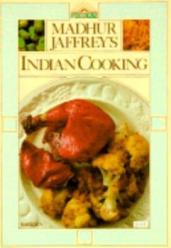 For Indian cuisine, I turn to Madhur Jaffrey, the British actress and food writer, who introduced the food of her native India to millions in the West. Her Indian Cooking remains an important resource with helpful explanations about Indian spices.
My favorite Moroccan cookbook is by Paula Wolfert. Her The Food of Morocco is full of colorful pictures and tasty recipes. I bought a tagine several years ago and this cookbook taught me the basic principles of how to use it.
For Cajun and Creole cooking nothing can beat Chef Paul Prudhommes’s Louisiana Kitchen. Jambalaya, gumbo, shrimp creole, it’s all here.
I could go on and on (in fact, I have) but that is probably more than enough for one blogpost. I do have over a hundred cookbooks, and there are many more worthy of mention, but these are the ones I reach for most. Enjoy. As Julia liked to say, “Bon Appétit!”


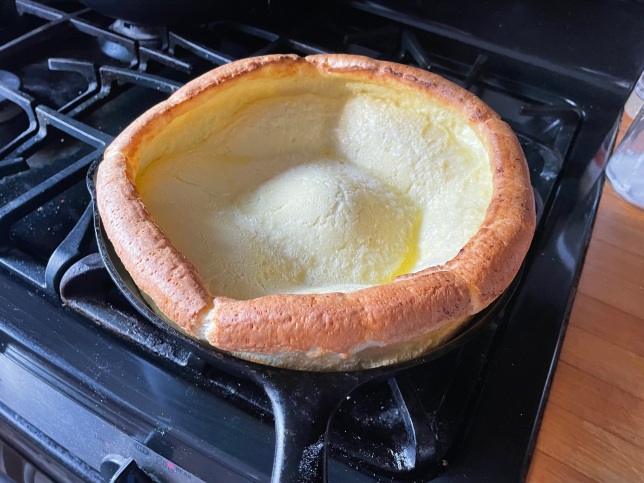 My daughter-in-law introduced me to this wonderful recipe. This is simplicity itself. Just eggs, milk, flour and butter whisked together and baked, and you have a lovely breakfast or brunch dish that has a texture somewhere between a pancake and a fluffy omelet. Serves four to six.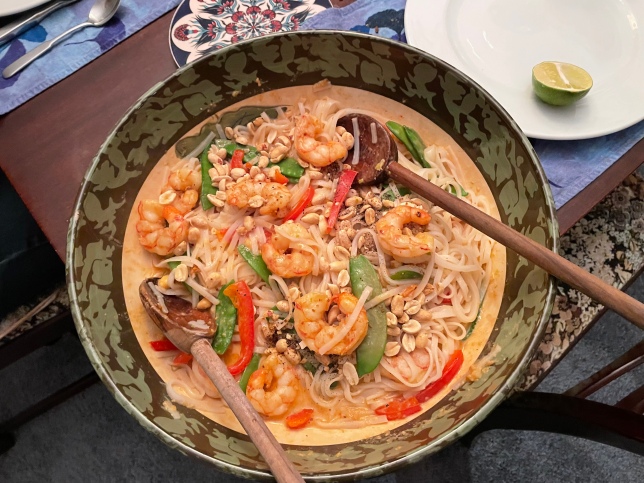

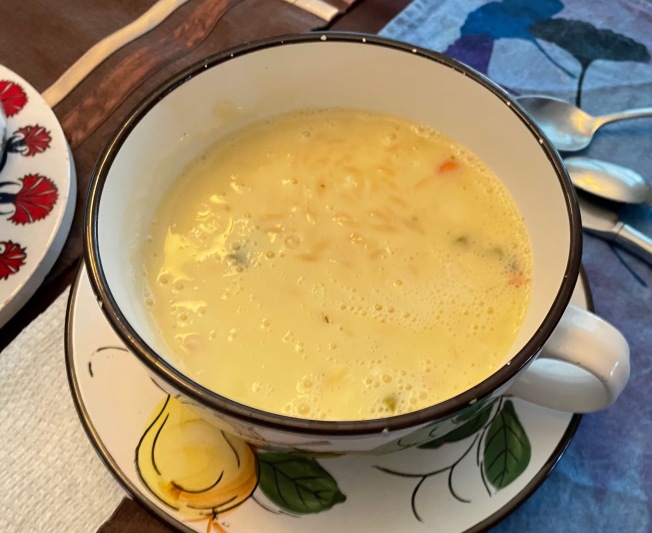 I had never had this soup until I started dating my wife nearly 50 years ago when I was introduced to it by her mom, who is a great cook. Her dad is the Greek, but her German mom cooked many Greek dishes. It became a favorite of mine, but I seldom see it on menus.